 2027 Annual Event Leadership Registration Marketplace Vendor Information Marketplace Workshops Schedule Evento Anual en Línea en Español Annual Event Online Missions and More Pre/Post Events & Add-Ons Sponsors Portland & Hotel
APCE 2027 — Wherever You Are
Annual Event Online 2027Can These Bones Live? Can't make it to Portland? You can still be part of APCE 2027.
APCE's Annual Event Online is designed to be warm, interactive, engaging, and connected—not simply a livestream of what is happening in Portland. Worship with us. Learn with us. Hear from our speakers. Join conversations. Meet other faith formation leaders. And continue growing in your own faith formation journey, wherever you happen to be. Register for Annual Event OnlineSimple Online Pricing
Annual Event Online: $200 Members • $225 Non-MembersOnline registration is $200 for APCE members and $225 for non-members. There are no Early Bird, On Time, or Just in Time price changes for online participation. Register for Annual Event OnlineAll event times are listed in Pacific Time (Portland time). What Your Online Registration Includes
A Full Online Annual Event ExperienceOnline registration includes access to the major Annual Event moments from Portland, your choice of online workshops, and opportunities created especially for the online community. Plenaries & Worship
Participate in plenaries, worship services, and other large-group programming from Portland.
Up to Five Workshops
Choose one online workshop in each of the five workshop blocks from the 21 workshops available online.
Exclusive Interviews
Enjoy special conversations with plenary speakers, worship leaders, and other Annual Event guests.
Online Community
Gather with other participants for conversation, reflection, idea-sharing, and connection throughout the event.
Participate in the Language That Works for You
English • Español • FrançaisOnline participants will be able to use captions in English, Spanish, or French, making the Annual Event an especially helpful option for participants whose first language is not English. ALL THE BIG MOMENTS
Experience plenaries, worship services, and special large-group programming from Portland.
21 WORKSHOP CHOICES
Choose from 21 workshops available to both online and in-person participants.
EXCLUSIVE INTERVIEWS
Enjoy special conversations with plenary speakers, worship leaders, and other Annual Event guests.
REAL COMMUNITY
Gather in conversation groups to reflect, share ideas, and connect with others throughout the event.
People Who Will Help Bring It All Together
Meet Your Online HostsMegan and Jess will welcome and guide our online community throughout the Annual Event, helping you stay connected to Portland and, just as importantly, to one another. 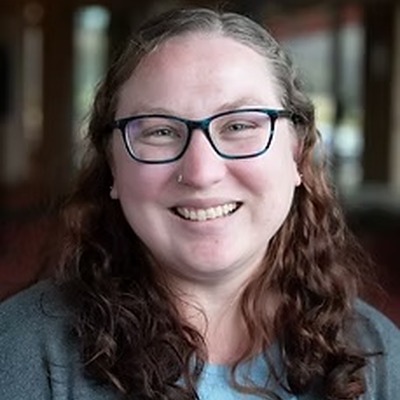
Rev. Megan BerryMegan serves as Pastor for Children, Youth & Families at Covenant Presbyterian Church in Madison, Wisconsin. Her ministry centers on nurturing faith across generations and helping children, youth, and families experience meaningful connection within the church community. Megan brings her warmth, creativity, and love of faith formation to APCE's Annual Event Online as one of your hosts. 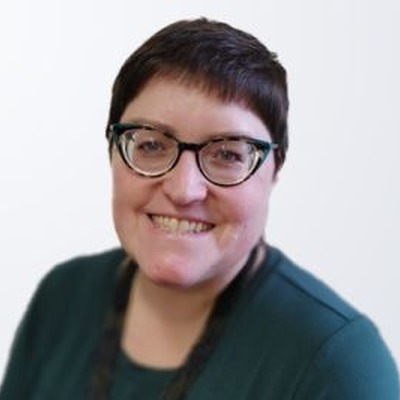
Jess FoyJess serves with The Presbyterian Church in Canada as Coordinator for Faith Formation with Children, Youth & Young Adults. She also represents The Presbyterian Church in Canada within APCE leadership and is deeply engaged in supporting faith formation leaders and ministries across the church. Jess brings her passion for connection, learning, and community to APCE's Annual Event Online as one of your hosts. Go Deeper
Add the Children’s Ministry Micro-CredentialParticipating online doesn’t mean you have to miss the pre-event learning opportunities. Online participants may also register for APCE’s Children’s Ministry Micro-Credential, Building Blocks of Faith for the Next Generation. The experience begins with the Tuesday pre-event foundational session and continues through selected Annual Event workshops and a post-event cohort. It is designed especially for those serving in children’s ministry who want practical learning, meaningful connection, and a more intentional pathway for growth. Learn About the Children’s Ministry Micro-CredentialPrefer to Browse or Print the Online Workshops?Use the Annual Event Online Workshop Worksheet to browse all 21 online workshop choices, read the complete descriptions, and make note of your selections before you register. Open the Online Workshop WorksheetHow the Online Workshop Blocks WorkOnline workshops are offered during five different blocks throughout Thursday and Friday. You may choose one online workshop during each block, giving you the opportunity to participate in as many as five workshops during the Annual Event. Times shown are Pacific Time (Portland time). A
Thursday
10:45 AM–12:15 PM
B
Thursday
3:15–4:45 PM
C
Friday
10:15–11:45 AM
D
Friday
1:45–3:15 PM
E
Friday
3:30–5:00 PM
Learn From Wherever You Are
Choose From 21 Online WorkshopsOnline participants can choose from 21 workshops offered throughout the Annual Event. Explore the options below and find the sessions that best fit your interests and ministry. Workshop Block A
A101 — Faith in Everyday Life
Sean Chow & Shawn Kang
This workshop equips leaders to cultivate Christian practices through relational, community-based expressions of faith embedded in everyday life. Informed by the PC(USA)’s 1001 New Worshiping Communities movement and shaped by experience from the Presbytery of San Diego, it focuses on forming communities with those outside the church, where faith is lived through daily rhythms and relationships. As participation in congregational life continues to shift, many remain spiritually curious yet disconnected from established patterns of church involvement. This moment calls for a renewed vision of Christian education, not primarily as curriculum delivery, but as formation through shared practices that shape everyday life. This workshop explores how Christian education can move beyond program-centered models toward practices rooted in homes, neighborhoods, and accessible community spaces. Participants in these groups will engage practices such as shared meals, Scripture, prayer, storytelling, and communal discernment that nurture belonging, spiritual growth, and faithful presence. Designed for educators, pastors, and ministry leaders, the workshop integrates theology with lived practice while offering practical frameworks for cultivating relational and sustainable faith communities. Workshop participants will develop a contextual model for a “Faith in Everyday Life” gathering suited to their setting. The workshop also introduces approaches to identifying and developing leaders, sustaining small communities, and fostering ongoing participation. Participants will leave with an adaptable plan for implementation, practical tools for their context, and a renewed vision for how Christian education can take root through everyday practices and shared life. A102 — Linking the Stories of God’s People
Erika Funk
When you wonder how the stories of scripture could possibly connect to your own. When you long for youth to see themselves in the disciples, the Israelites, or the story you’re teaching this week. When you want to build deeper community within your congregation, your small group, your family, or among newcomers to the faith. The story-linking process places our stories in dialogue with faithful disciples we know, and with those we encounter in scripture. Not just Bible stories. Not just stories about famous saints or heroes of the faith. But the stories we are living—right now. A103 — Can You Be a Progressive Evangelical?
Gini Norris-Lane
Associated organization: UKirk Collegiate Ministries Association
If faith is not primarily about going to heaven or avoiding hell, what is it about? How we articulate the answer to this question matters. What also matters, maybe even more so, is learning to understand the stories of those who have been hurt by the church, who are deconstructing faith, or whose fundamental questions—and yearnings—for God and for community are different than we think they are. Jesus starts his ministry by proclaiming in Luke 4:18-19 that his purpose was to “proclaim good news to the poor, freedom for the prisoners, sight for the blind and to set the oppressed free.” Workshop participants will explore what this verse can mean in our contexts. We will discuss how we are called to meet those who are hurt, skeptical, and questioning with compassion, and shape our programming around their needs and questions. A104 — Grandparents in the Faith Formation Journey
Jaime Staehle & Anne Hagerman Wilcox
In many congregations, family faith formation has rightly focused on parents, but what about grandparents? Increasingly, grandparents are asking how they can more intentionally share faith with the children they love. They are present, invested, and often spiritually curious about their role. This workshop explores how churches can equip and include grandparents as vital partners in intergenerational faith formation. Drawing on real-life examples and emerging practices, we’ll consider how to adapt existing parent-focused initiatives to engage grandparents in meaningful, accessible ways. At a time when the church is rediscovering what matters most, this conversation invites us to reconnect generations, honor the wisdom already present in our communities, and imagine how faith can be nurtured across the full span of life. Participants will leave with practical ideas, adaptable models, and renewed vision for engaging grandparents in the life of the church. A105 — Good Bones: Evaluating and Adapting Children’s Curriculum
Rebecca Davis • Micro-Credential
Choosing curriculum that fosters life-long faith and discipleship with children is an essential aspect of our ministry. Sometimes the curriculum’s approach to scripture matches our perspectives, but the activities won’t work in our context of ministry. Other times the theme, music, and presentations are exciting, but the theology is inconsistent with our tradition. The reality is every curriculum must be adapted for our congregational setting. Let’s explore how to evaluate the key elements of curriculum and how to adapt it when we cannot find the exact right one.
Workshop Block B
B201 — What Matters: Unlock Your Church’s Hidden Potential
Yvonne Murray & Kim Jones
What if the secret to revitalizing a church isn’t a slick new program, but unleashing the passions already alive in the pews? Come be part of an interactive experience that reveals the cares, callings, and social concerns God has stirred within you—and meaningfully connects you with others who share kindred dreams for a better world. This flips the script, encouraging us to live out our faith where it matters most to us and inspiring us to build a community of purpose and justice in our churches and beyond. You’ll leave fully empowered with the blueprint to recreate this profound encounter in your own church, galvanizing your people's passions and talents toward God’s good work. B202 — Sexuality and Faith: Talking with Children
Debbie Gline Allen & Sarah Lohrbach • Micro-Credential
In this workshop, we will discuss the importance of age-appropriate, faith-based conversations around sexuality, bodies, and identity with children of all ages, particularly early elementary-aged children. If we can move beyond our discomfort to engage in these conversations with young people, we will help them grow up to have healthy relationships with their bodies and respect for their own and others’ boundaries. We will look at some common myths around sexuality education and engage in dialogue about why faith and the church should not be removed from these conversations. Whether you are a parent, a faith formation leader, a pastor, or someone simply interested in this topic, we invite you to join us for lively conversation and the sharing of resources to aid in these conversations at home and in your place of worship.
B203 — Accessibility in Ministry: Trauma and Disability Informed Ministries in Practice
Christy Miller White
We know that being trauma and disability informed is vitally important, but actually implementing strategies that work can be a challenge. In our time together, we will journey through a brief overview of trauma and disability awareness in ministry. In addition, we will learn practical applications and hone how to best utilize them in various ministry settings. You will walk away knowing better how to care for all people in your ministry and be ready to put these new skills into practice.
B204 — Faith through Adversity: A Roadmap for Resilient Leadership
Meredith Montgomery & Anne Wilson
This workshop seeks to foster thought provoking reflection on the resilience of the human spirit and the quiet courage it takes to stand up for what’s right. We are living through turbulent times where political polarization, economic disparities, and social and safety concerns have led to widespread anxiety as a nation. How do we find the strength to endure without losing our sense of purpose when the path forward seems unclear? Together we will look to history for inspiration and offer an actionable roadmap for modern resilience. We’ll first explore the story of how one Japanese American family navigated another challenging chapter in our nation’s history—World War II. Hear the story of a teenager who was incarcerated in an internment camp after being uprooted from life as she knew it. Her future husband faced his own adversity, fighting in some of the war’s fiercest battles to defend a country that deemed him the enemy. Told by their daughter and granddaughter, these stories of grace and dignity through atrocious acts of discrimination and injustice illustrate how maintaining one’s identity and values can become a radical act of resistance. Inspired by this couple’s experiences, we’ll then explore the Stockdale Paradox as a tool to navigate our own obstacles. This concept focuses on how to honestly acknowledge the hardships we face while holding onto the unwavering belief that we can—and will—overcome them. Attendees will leave with a renewed perspective that will ground them in their everyday lives and serve as a powerful mindset for courageous leadership. Workshop Block C
C301 — Wonderfully Wired: Nurturing Children’s Faith Through a Neurodivergent Lens
Michelle Junkin • Micro-Credential
Come discover practical, inclusive ways to help every child connect with God, no matter how their mind works. In this workshop you will learn how neurodiversity shapes children’s spiritual lives and reimagine how our faith formation setting might need to be adapted in order to include the nurturing of all minds. Participants will reflect on current practices, explore inclusive teaching strategies, and gain practical tools to nurture the spiritual growth of neurodivergent and neurotypical children, so every child feels seen, valued, and spiritually empowered. By the end of this session, participants will recognize how differences in attention, sensory processing, and communication influence children’s faith experiences. You will learn how to identify barriers in traditional faith formation settings that may unintentionally exclude neurodivergent children and explore how to apply practical strategies that honor diverse ways of learning by exploring ways to implement neurodiversity-informed approaches in their ministry.
C302 — Creating Accessible Worship for All God’s Children
Sarah Leer & Lisa Hancock
What does it mean to create accessible worship? What are some ways you can nurture children through worship using anti-ableist principles? What does it mean to be anti-ableist anyway? Come and learn from the Growing in Grace team. We'll share lessons learned, practical tips you can use in your church or faith organization, and ways you can talk about disability and theology with the folks in your context. "Growing in Grace," is a Lilly grant funded Wesleyan institute that exists to assist local churches and organizations in the work of forming all children into anti-ableist Christians through worship. Growing in Grace believes we can help children learn and believe that all God's creation is God's good creation. A program of Discipleship Ministries, an agency of The United Methodist Church, Growing in Grace seeks to equipping world-changing disciples with anti-ableist programming and resources created with an intentional intergenerational lens. C303 — Planning and Facilitating Brave Conversations with Youth
Christy Williams
Whether it is politics, money, sexuality, or a dozen other topics, there are ways to have tough, awkward, even controversial discussions with youth that will assist them in developing a deeper understanding of how to live out their faith more fully. Using the Brave Conversations on Sexuality resource produced by the Presbyterian Youth Workers Association as a model, workshop participants will explore how to prepare the congregation, families, and youth for having brave conversations and then how to facilitate those discussions with youth and their parents.
C304 — Effective Ministry Policies to Prevent Abuse and Maintain Proper Boundaries
Jennifer Perri & Chad Cunningham
Associated organization: Insurance Board
The church should be a safe place for people to worship, work, connect and receive care and support in a manner that is free from abuse. Protect your ministry by learning policy best practices and boundary training to prevent abuse and provide a safe environment for everyone. This workshop will cover how churches can protect their ministry against the potential of abuse through proper policies, as well as the importance of background checks and screening, and state of the art training.
Workshop Block D
D401 — Reimagining Children’s Faith Formation in a Changing Landscape
Karen Hammond & Julie Emery • Micro-Credential
Have you noticed that faith formation looks different than it did a generation ago—or even a few years ago? Maybe you're seeing fewer children on Sunday mornings, more irregular attendance, or less participation in traditional Sunday School programs. You're not alone. Many of us are navigating a new ministry landscape. We're experimenting, adapting, and trying new things, all while wondering: Are we truly helping children grow in faith? Are we creating meaningful opportunities for spiritual formation, or are we simply keeping kids occupied? How do we stay focused on our mission when the old models no longer fit our reality? Join us as we share what we've learned while navigating these same questions in our own congregation. You'll hear from a Senior Pastor and a Director of Faith Formation who have partnered to reimagine worship and children’s faith formation in a small church setting. Together, we've worked to create worship experiences where children are not just present, but engaged as full participants and offered rich faith formation opportunities. This workshop is for anyone who cares deeply about helping our children grow in faith and wants to explore what it can look like in today's church. Together, we'll share stories, wrestle with challenges, ask honest questions, and learn from one another's experiences. We'll celebrate what's working, acknowledge what's difficult, and imagine new possibilities for the future. Come ready to participate in a conversation with others who understand both the challenges and the opportunities of this moment. We hope you'll leave with practical ideas, a fresh perspective, renewed energy, and greater confidence as you continue the important work of nurturing faith in your community. D402 — Can These Church Properties Live?
Carl Horton
Associated organization: Presbyterian Investment & Loan Program (PILP)
As ministry shifts across the church, once bustling buildings and filled parking lots now sit largely empty and underutilized for much of the week. Church properties intended for growth remain vacant and undeveloped, existing buildings become burdensome. But congregations and mid-councils across the country are approaching these property challenges as ministry opportunities, turning these liabilities into assets, breathing new life into church property for community good. We’ll look at a number of visionary church property projects like affordable housing, childcare centers, healthcare centers, and other ministries that enrich and enliven both community and congregation. We’ll overview the church-repurposing process, dig into the theological and biblical basis for this work, and explore the spiritual formation and practices of congregations committed to a new and innovative future life for their properties.
D403 — These Bones Still Preach: Reclaiming the Spiritual Authority of Older Adults
Denise Shannon
Associated organization: Presbyterian Older Adult Ministries Network (POAMN)
Too often, older adults in the church are seen primarily through the lens of care, decline, or nostalgia—rather than as vital spiritual leaders whose voices, stories, and theological insight are essential for the present and future of the church. Drawing on the imagery of Ezekiel’s dry bones, this workshop invites participants to reconsider what has been dismissed or overlooked and to recognize the enduring spiritual authority carried by older adults. These are not “dry bones,” but lives shaped by decades of faith, resilience, loss, and hope—lives that still have something to say. Together, we will explore how congregations can move beyond passive or programmatic engagement to actively elevate older adults as teachers, storytellers, mentors, and leaders. Participants will be challenged to name and dismantle age-based assumptions while discovering practical ways to create spaces where older adults are not only included, but are recognized as essential voices in shaping the church’s witness. D404 — Culture Change and Centering Children: After the Bones, Two Sticks
Patrick Reyes
Just after the dry bones rise, God hands Ezekiel two sticks and tells him to hold them together until they become one in his hand, a sign of divided people made whole. This workshop takes that image as a blueprint for culture change, and it puts children at the center of the work. Too often we treat culture as something the adults sort out and the children inherit. But the two sticks only become one when someone is willing to hold the tension long enough for it to bind. Children do this instinctively. They cross the lines we have hardened, they ask the questions we have learned to stop asking, and they refuse the false choice between this stick and that one. Together we will explore what it means to build communities where children are not the recipients of a culture handed down but active hands in the joining, and we will leave with practical, embodied ways to let their wisdom reshape how our congregations and classrooms hold what has come apart.
Workshop Block E
E601 — Adult Ed in a Purple Church: Teaching across the Divide
Greg Allen-Pickett
In a time of deep polarization, many congregations feel like valleys of dry bones: fragmented, weary, and unsure how to move forward together. Political, theological, and cultural divides often surface in adult education, where meaningful conversation can quickly give way to silence or conflict. This workshop explores how adult faith formation can become a place where communities reconnect, rebuild trust, and rediscover what matters. Drawing on the presenter’s experience leading a politically diverse congregation—and insights from the book Purple Church, Red State: Finding Common Ground in an Age of Polarization—participants will be invited to share stories from their purple church contexts and be introduced to a practical, adaptable curriculum developed for use during contentious times like election cycles. This model helped one congregation intentionally build the beloved community by integrating preaching, small groups, and adult education around shared themes and biblical texts. Participants will leave with:
Through guided reflection and practical examples, this workshop equips leaders to move beyond avoidance and into faithful engagement. Even in divided times, God is still at work bringing new life to the body of Christ. E602 — Christian Practices for Everyday Life
Priscilla Andre-Colton
As human beings, we hunger for a meaningful way of life, for a faith that makes a difference in our homes, in our communities, in our world. Christian practices are the ways by which we live the Christian way of life and deepen our relationship with God, with one another, with the world. These practices include a variety of activities that both nurture faith within and reflect faith in action. This workshop will examine some practices and how they might grow our faith.
E603 — Cultivating a Creative Classroom for Young Disciples
Brianna Bamberg • Micro-Credential
In my workshop, I will be showing various ways to use the faith formation hour as a time for creativity and innovation. I have worked with children for almost half of my life, so I want to share tactics that I have used as well as new ideas on how to modernize children's faith formation—both with fun activities and also, with engaging content that is developmentally appropriate for specific ages (preschool through 5th grade.) The key to a successful faith formation program is to make the kids want to come so we, as the new church, must learn how to market Sunday school as something more than the ancient practice of bible verse memorization and move towards finding connections to everyday life through the teaching of biblical narratives.
E604 — Vision, Understanding, and Creativity: Leadership for Educational Ministries
Rebecca Davis • Micro-Credential
The challenges facing congregations today are more than we’ve ever known in our lifetime. What was once unimaginable must now become imaginable. Developing leadership grounded in vision, understanding, and creativity can help us move from challenges to possibilities. Let’s explore together an imaginable mindset through new patterns, models, and approaches in Christian education so that faith formation shapes identity, nurtures meaning-making and engenders faithful living in the world.
More Than Watching a ScreenOne of the things that makes APCE's online experience special is the opportunity to be in conversation with other participants. Throughout the Annual Event, online participants will have opportunities to gather, reflect on what they are hearing, share ideas, and make connections with others engaged in the work of faith formation. You'll also enjoy special interviews and conversations with Annual Event guests, including plenary speakers, worship leaders, and others, created especially for those participating online. Portland May Be Miles Away.
|
